ad

Sunday, November 21, 2021

The Room Three

The first The Room game I played was the VR title named The Room: Dark Matter. I enjoyed the game very much (review here) and that is why I decided to buy the previous games that existed at the time. After playing The Room One I was very disappointed with it (review here) and was not sure if I'd play the following games. I suffered through The Room Two - too ambitious project Fireproof Games didn't seem to know what to do with - and then just gave up. 11 months later I decided to play the third game in the series. To my surprise the game was different than the previous two games.

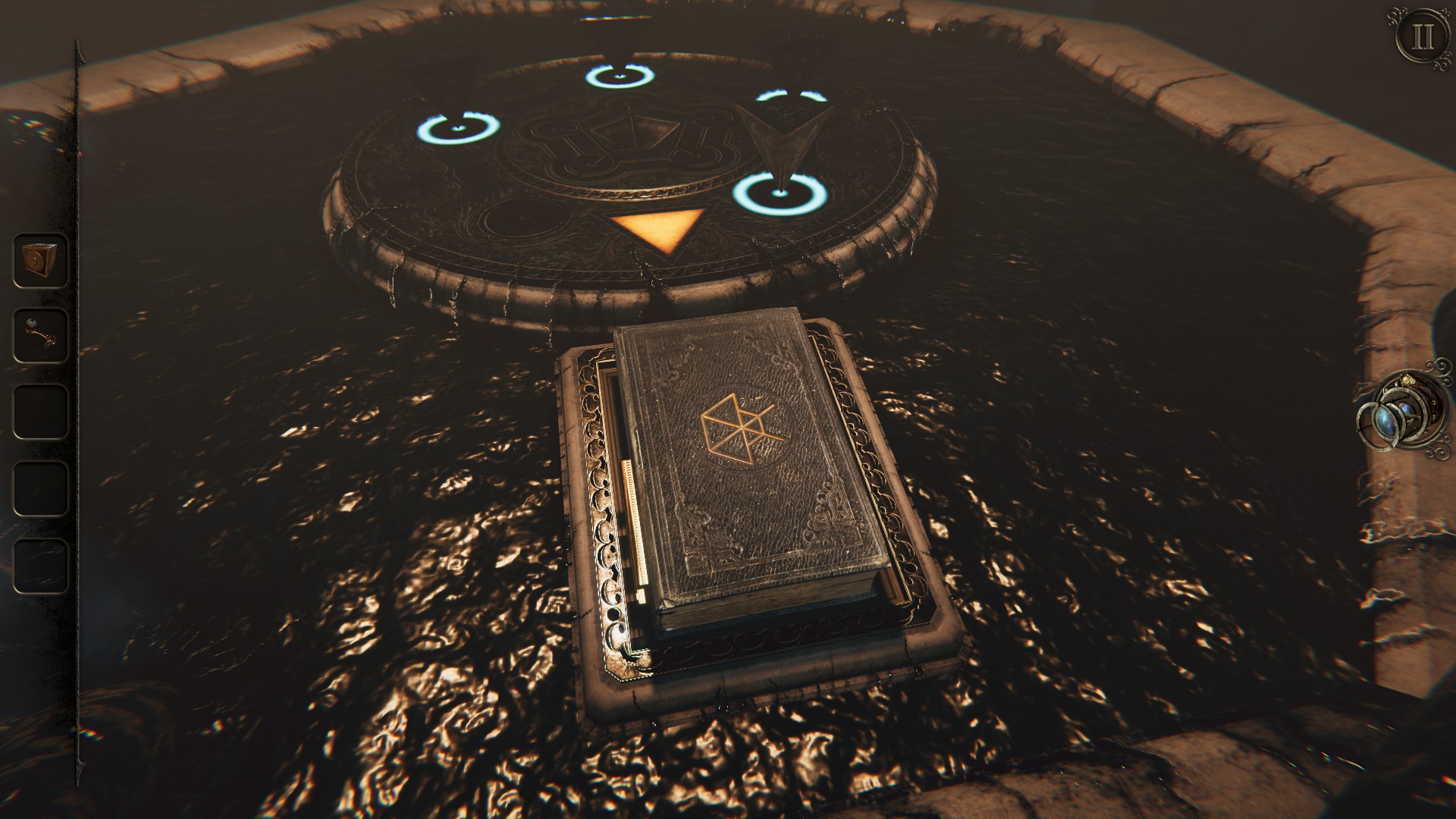
The Room Three is a mix of point and click adventure and a puzzle game developed and published by Fireproof Games for PC in 2018, three years after its original iOS/Android release. The game is about still unnamed protagonist from the previous games who gets kidnapped and imprisoned by The Craftsman on an island everyone avoids. The protagonist's task is to prove himself to the Craftsman and that is how the adventure begins. What you need to do is power up rooms or buildings, open a hidden door and solve a series of puzzles to get a pyramid. After collecting all the pyramids you are allowed to go to the final stage of the game and reach one of the several endings. While on your adventure or rather escape you learn more about the mystery about the Null - mysterious alien creatures/energy - through notes left by the Craftsman and his prisoner.

The Room Three is different compared to the previous two games mainly because the game takes place in one building complex where you have to walk around and backtrack to find and solve puzzles. For me it breathed more life into the game and gave me a sense of immersion that I didn't have in the previous games. The environments are beautiful and walking around would be simply wonderful if you could do that, instead there is one place you will simply appear after a rather long animation of getting there. The game is still linear and won't allow you to roam freely most of the time while you are 'locked in' a chapter. You are actually locked in a certain part and can't leave until you finish the chapter. After finishing the game for the first time you will be able to 'Change your fate'. You will be back in the old manor and you can try to walk around and solve certain puzzles to reach 3 more different endings. This time the objects you are looking for can be anywhere and can be used on something being totally elsewhere. Once you get all the needed objects you can go to the final stage of the game, solve the same puzzles over and over and get the different endings. In a way, we can be happy not to replay the whole game, but 'solving' the puzzles again certainly feels bad.
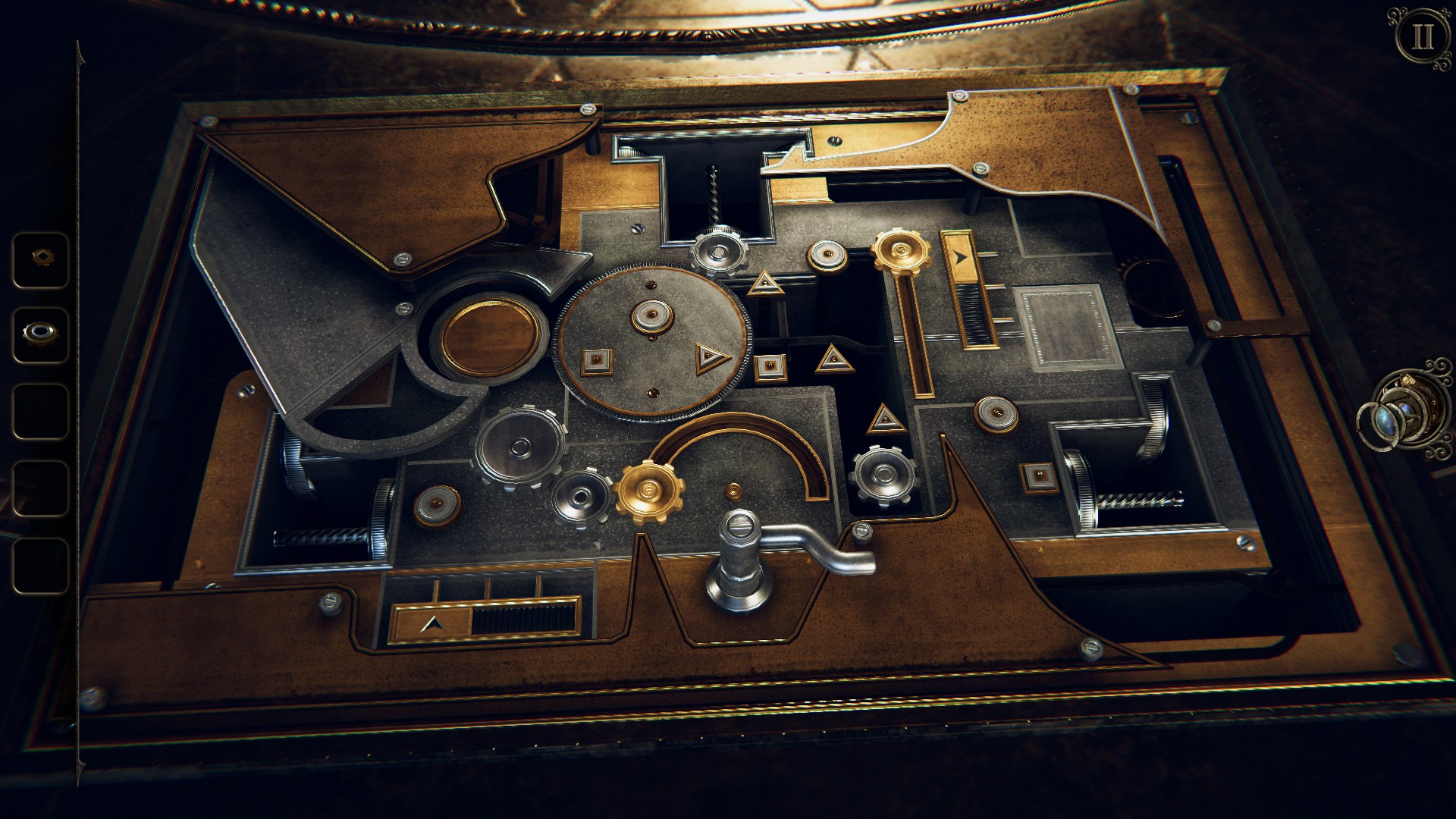
As for the puzzles, similarly to previous games, I wouldn't really call them puzzles. The game is more of a 'find an object, insert it into another object, move this and that, get a new object'. This time the order of puzzles is actually logical even though you still don't need to use your brain to solve them. As in the previous games you'll be clicking around, finding things that can be moved or pressed. If you played the previous games you won't need to click around that much since you might already look at a drawer from all angles in anticipation of a switch or a button at an unlikely place. When you get a new object you'll try to think where it could fit. I'd say the complexity went down in this game but I don't think it was a bad decision. The puzzles and menial tasks you have to do are not confusing which makes the experience good. Thanks to the eyepiece that shows hidden things you can also enter small places - see Alice in Wonderland - and thus operate some things from the inside. I liked this very much even though it wasn't as cool as in VR.

There are still hints in the game. If you get stuck you can click on a lit up question mark and get a hint. There might be more hints for one puzzle and there is a timer when the next one becomes available. There are no hints for puzzles needed to be solved for the alternate endings.

The graphics is beautiful. The textures are beautiful and seem to be of high resolution. Lighting is great. The only thing that's weird are the Null tentacles which seem to be rather low poly compared to other models and moving at half framerate. I haven't played the game on mobile but the PC version truly feels like a game meant for a computer unlike the previous games that tried to run in a mobile phone resolution and whatnot.

I can't comment on sound or music because I turned it off (due to certain sound effects irritating me in the previous games so much).

As for the controls it felt similarly awkward as in the previous games. If you can avoid playing this game with a mouse I recommend doing that - either a touch screen or tablet. On the other hand due to less creative and complex puzzles you don't need to be moving objects in a really strange way so you should not struggle as much as in the previous game.

Verdict:
The Room Three feels more like a PC adventure game rather than a mobile puzzle game. It is a point and click game and that's about it. The previous games focused solely on the puzzles, the first one on single objects, second one on various objects within a room. The Room Three takes it a step further which may not work that well for a mobile device but works on PC. On the other hand this game is very limited in terms of exploration and this way feels rather lacking. While many animations felt more smooth and faster than in previous games, the one most important animation - movement from one place to another - takes a very long time.
The graphics are way better and make the game a very enjoyable atmospheric experience (with several horror elements).
The controls are still as clunky as ever but the puzzles themselves require less object manipulation which results in less frustration. On the other hand the game is rather buggy and often there are certain layers of graphics that do not align and that make operating the game or solving puzzles more frustrating.
I finished the game in 6 hours including the alternate endings which makes it longer than its predecessors and provides more on the story as well.
I wouldn't recommend this game to anyone, but if mindlessly clicking is your thing you can give this game a try.

Thank you for reading
Ren

Sunday, October 24, 2021

Prince of Persia review and walkthrough

Prince of Persia is a platformer developed and published by Brøderbund in 1990. It is one of the first PC games I got to play and as such it was the game to teach me how to use the keyboard to control the prince, survive and eventually, many hours later, save the princess for the first time.

Most platformers I played around the time were rather action related. You were running around avoiding weapon projectiles, shooting enemies while trying to get from point A to point B often jumping across gaps, traps and moving platforms. When playing game like that you had first discover what is possible and what is not in terms of jumping, falling, avoiding or shooting. There was nothing that would hint that. It was up to you to figure that out by trial and error. I was pretty bad at this and I knew that spending money on these arcade games was a recipe for disaster.

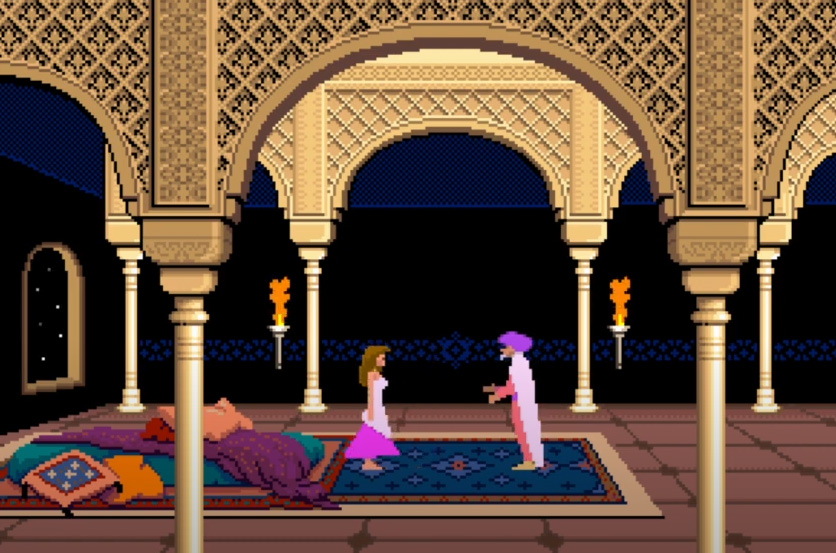
Prince of Persia is a different kind of platformer. The game looks realistic compared to other games of the time, that is primarily because it is realistically animated. The intro shows Jaffar and a princess. The interaction between the two characters shows movement that made me see these characters as living people. I also enjoyed the colorful graphics and the rather unusual point of view in 2d platformer games. When the game begins we see prince being thrown into a dungeon. When he landed on the ground I realized that this character would walk, run, jump and fight like a human being - not a floating 2d sprite that hardly had any legs. I was right about it. The prince's moves were all animated. The animation felt real even though one would question the efficacy of the movements.

Starting in the depths of a dungeon, you need to find a sword first to defeat your first enemy and then go up to the highest level and save the princess. You have 60 minutes to beat the game. You'll be running around the level trying to find a way to another door leading up to another level. There will be gaps you'll need to jump across, blades you need to avoid, environmental puzzles to solve (usually just involving different platforms to step on or avoid), enemies to kill or avoid etc. The prince moves in a way human person would, meaning he can't just unrealistically far or high. He can make a step, walk, run, crouch, climb up or down, jump (over something), do a running jump. All these follow the same rules so knowing them you will need to figure out how to clear a level. The prince has 3 lives at the beginning of the game and there are potions that can be drank to either get additional life (hidden at places that won't take you closer to next level), cure a life or lose life (these are blue). The prince loses life when hit by a sword, or when he falls two floors down, or when a platform falls on his head. The prince will die when he falls lower than two floors, is stabbed in the back or gets caught in a deadly trap be it blades or something else. After dying the level restarts with the exception (level 3 where there is a checkpoint).

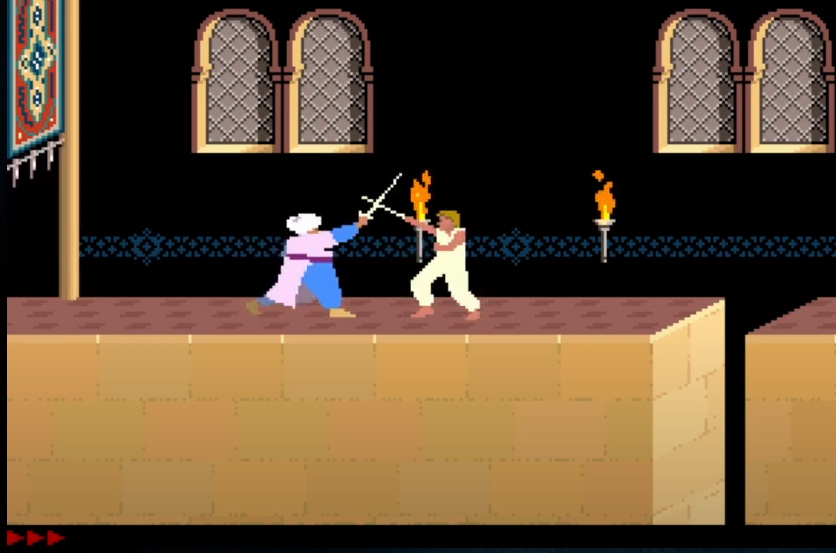
As for combat, the fighting is also more realistic than other arcade platformers. When prince gets near an enemy he draws his sword. The player can either attack, black or sheath the sword. Parrying is not necessary to use against most enemies but two Jaffar himself and one of his best guards. The enemies are harder and harder to beat and even have their own fighting style.

The game doesn't feature in-game music, just intro and outro music which I enjoyed. The sound effects are ok. At that time though, how many of us had sound cards that could actually produce good sound?

Verdict:
This game is a must play for any gamer. Prince of Persia is a game that started a new genre of games and set the bar quite high. The game has very good graphics and atmosphere. It has great animations that breathed life into the game. The gameplay is good, it requires some skill in controlling the prince but it is something anyone can learn to do. The level design is great and it forces you to explore while being wary of the remaining time since there is 60 minutes to complete the game.

For those that would find the game too difficult for some reason, you can type 'prince megahit' to run the game which will unlock cheats. Pressing + will give you more time, K will kill any enemies on screen, R will resurrect the prince etc.

Thanks for reading

Ren (stsungjp on Twitter)

Friday, October 1, 2021

Red Matter review and walkthrough

If I should describe Red Matter, then I would describe it as a first-person puzzle adventure game. Red Matter immerses you in a mysterious Cold War story that takes place on Rhea, Saturn's moon, and an abandoned Volgravian base.

Volgravia, is a soviet-like country, that was researching some kind of red matter on Rhea. You, an Atlantic Union agent, venture there and go to the now evacuated Volgravian base to find data about research that was left behind. While exploring the base you will start discovering dreadful clues about what happened. Volgravian language needs to be translated using a translator. Any cyrillic-looking text will be translated if you scan it. The scanner is a tool you will need to proceed in the game. Scanning and translating is something that makes the whole experience more immersive. You also have access to a flashlight and claw like hands on your suit which you will use to handle objects.

The immersion is not even broken by locomotion. The moon has lower gravity and you hop in your suit from place to place. This means that you can also hop quite high and reach places you wouldn't be able to on Earth. You can also hover in any direction or just walk around which I had the tendency to do the most and I had to remind myself that I was in virtual reality and not the real world. The speed can be adjusted which is good for people like me - who get motion sick. While in air (if there is any atmosphere?) you can just look around and enjoy the environment that is very well done.

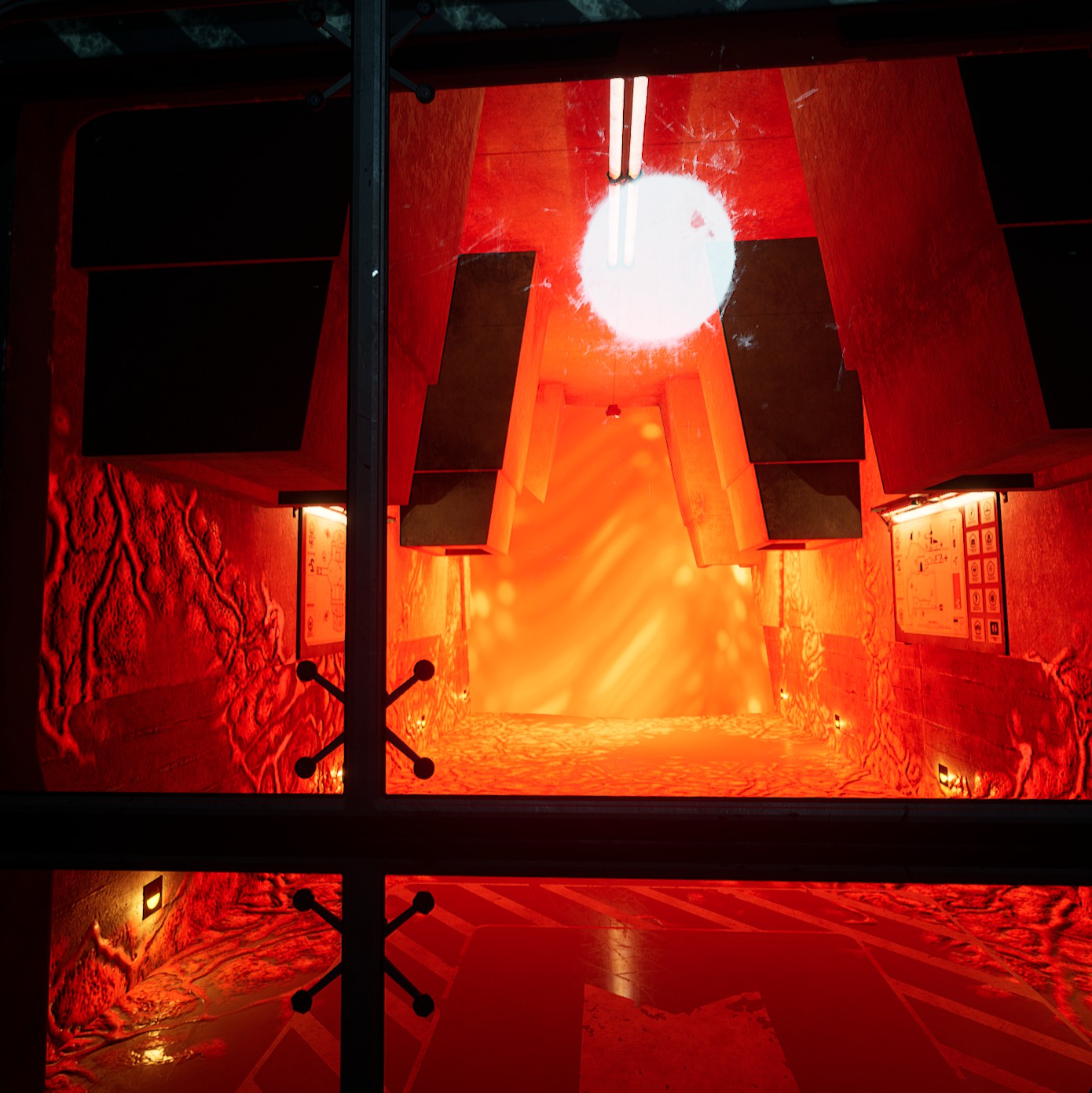
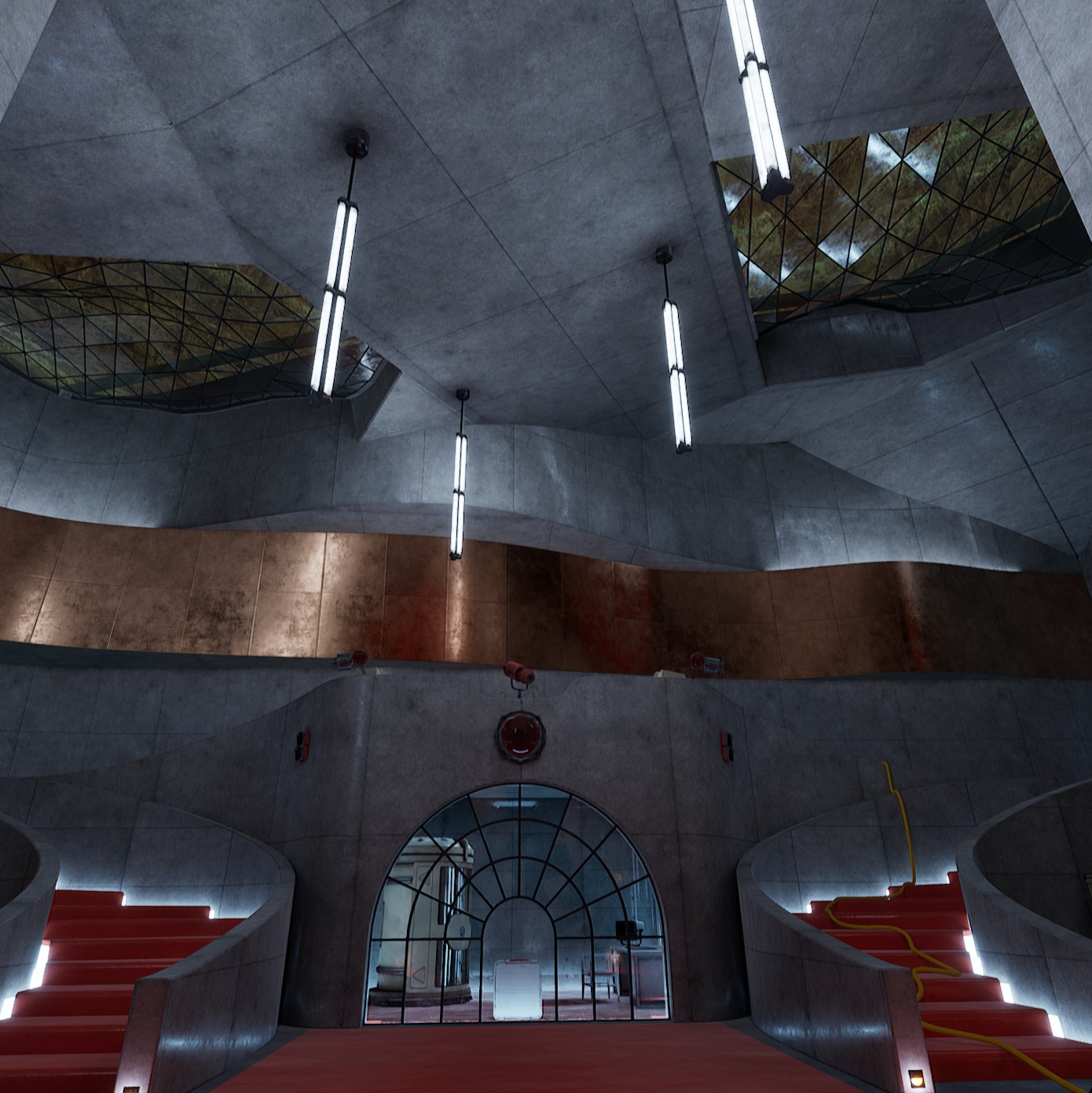
While the game's graphics is nothing that would make us awestruck it is very good in making us feel like we are truly there. The design is simple but works very well and is perfect for the Volgravian base. Textures are of high quality and very good (and bump-y!). There's nice lighting and reflections. Nice is an understatement, it makes the game seem look realistic. Also there are many details, especially in the habitat section of the base. While some graphics elements feel a bit out of place it is mostly very coherent and atmospheric. There are more things that make you feel inside the game, there is a moment where you have to move slowly in order not to lose charged and unstable matter. Moving levers or opening door manually is something that feels like it needs physical effort. I enjoyed all these details.

Red matter has a mysterious story and many people could think about it as a horror story. VR seems to be the best for delivering horror stories but this game shows how a story can be told without the need of jump scares, brutal violence, or hide and seek. There is a tension that will be getting higher and higher during the game and it can spook some people. The story is mainly told through objects you find, or rather you get clues about what happened. It is up to you to divine what actually happened. You'll also learn more about the crew making the story even more real. The story also has plot twists and will make you think about what was possibly going on all the time and rethink all this once again when you reach the final stage of the game. This is something I did not expect from a short VR game.

The sound is very well done and it will certainly make the tension even higher. A subtle strange sound can get some people startled. There were times I wished to turn around and run away or at least grab a crowbar. The thing is, there are no weapons in the game and thus no combat. No need to run away or fight which makes this game ideal for everyone.

The puzzles are not some out of place puzzles but are part of the tasks you are supposed to do. Sometimes they are very straightforward - just read instruction and follow them, but sometimes there are things you need to figure out on your own. They won't make you feel like you are doing something totally meaningless in order to advance in the game unlike some other games.

There is one thing that was breaking my immersion and that was the grid on which you could teleport. The game is also rather short. It took me less than 2 hours and I was scanning every object I encountered and listened to everything while also taking screenshots, enjoying the environments, models and textures.

Verdict:
Red Matter is a short story driven game that will make you experience something that feels very real even though it takes place in an alternative universe and abandoned space outpost. The immersion is where the game shines and for that alone I would recommend the game to anyone who wants to have a good VR experience. If you have Quest and want to show how a good game can look like or feel this is the game to play.

Ren (you can follow me @stsungjp on Twitter)

Saturday, September 18, 2021

DEEMO -Reborn-

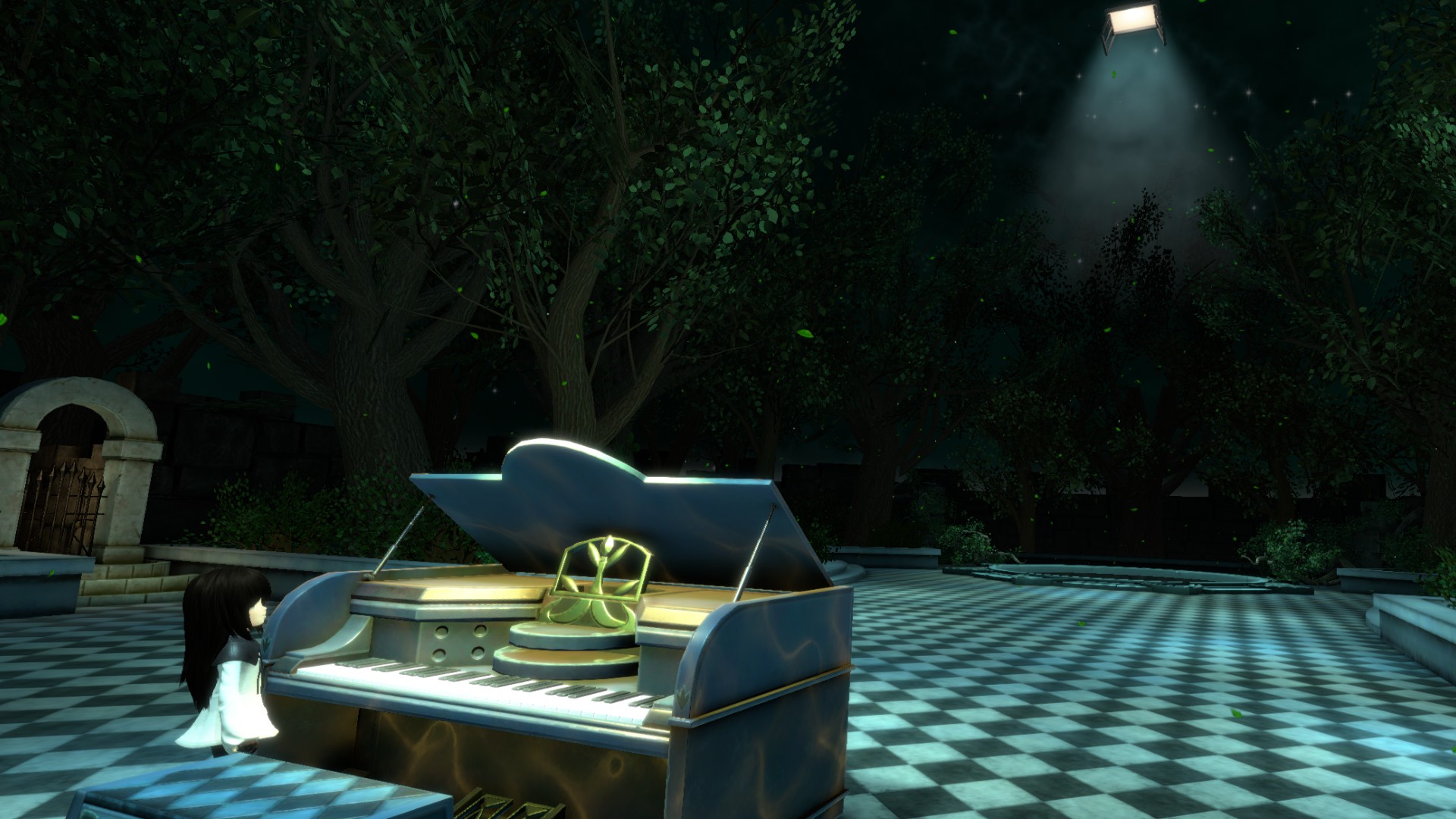
DEEMO is a mobile rhythm game from 2013 that features beautiful piano music and became popular through the years. In 2019 a game titled DEEMO -Reborn- came out. This game is indeed a Deemo game but is not only a rhythm game but also a point and click adventure game. You can play it in a traditional way on Playstation, Switch or PC, or you can enjoy it in VR on PSVR or PCVR.

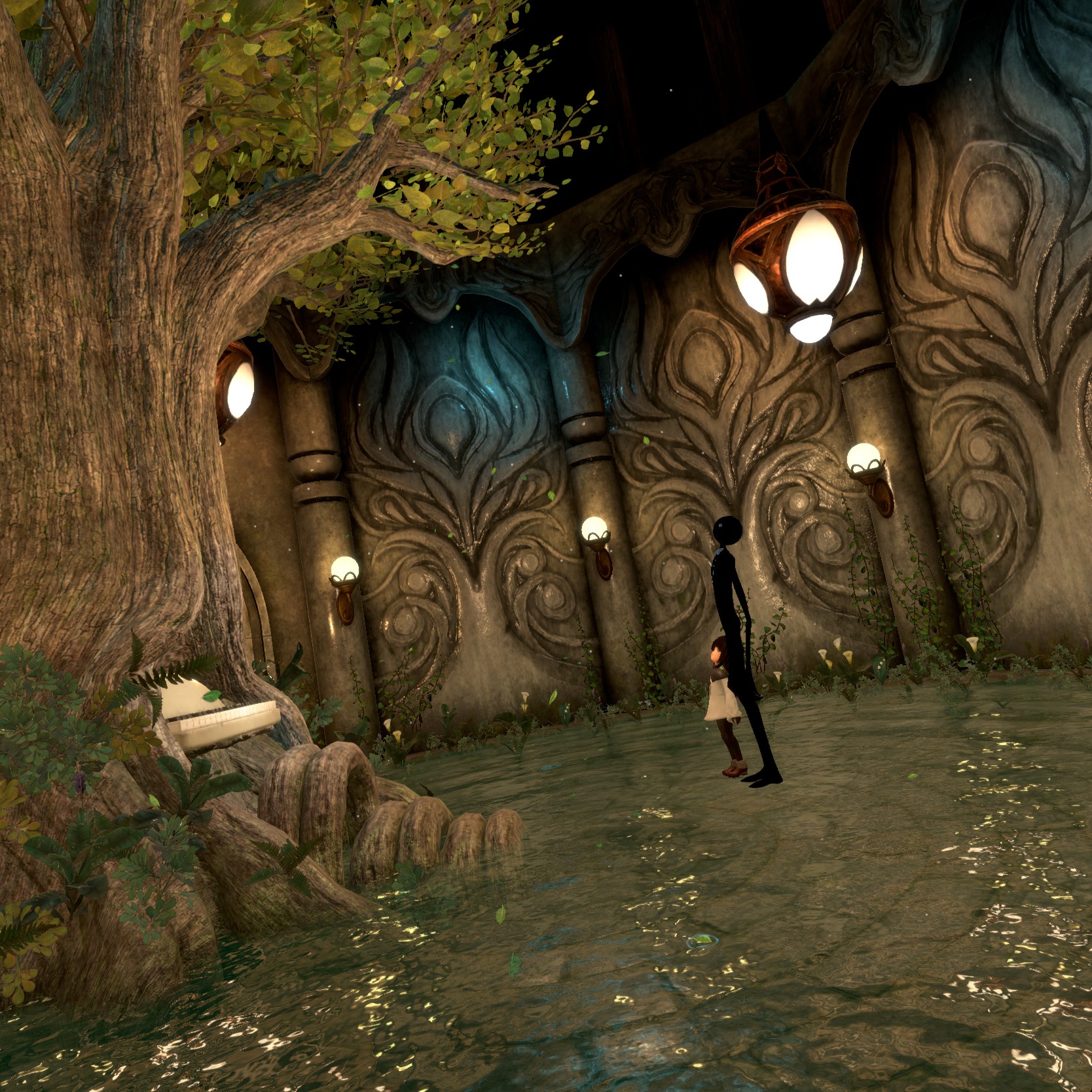
The game starts with an elegant black almost stick figure creature, named Deemo, playing the piano. Then we can see a bright light and a window opening above the piano. Little girl falls down from it and is caught by Deemo. From there on the little girl - Alice - tries to find a way home. Alice discovers that a tree grows when music is played on the piano. Meanwhile Alice walks around what seems to be a magical castle. There she finds sheet music Deemo can play to make the tree grow taller. In order to get sheet music, it often requires Alice to solve puzzles. She also discovers different clues about its inhabitants and everything seems strangely familiar. You get the feeling that something is really wrong about the whole place.

To advance in the game you will have to play different songs which is the rhythm game part of the game. Once you click on the piano to play, you will be taken to a new environment. Notes will scroll down to you and when they arrive to a target line you will have to use your hands (if in VR) to press an imaginary piano key below where the note lands on the target line. In TV mode you will play the game either on keyboard using S, D, F, J, K, L keys or Left, Up, Right, Square, Triangle, Circle on a controller. The keys cannot be rebound which may annoy some people who are already used to play 6-key mode using different keys (it's one key off from DJMAX default setting which turned out to be a problem for my hand). The D/K or Up/Triangle notes are black and the rest shows white. The songs in VR have 2 difficulties while there are 3 in TV mode (Easy, Normal, Hard).

While VR is not particularly great for this kind of play, the difficulty of songs seems to be balanced for VR play - there are VR charts and they are not difficult. The controls are a bit finnicky though because it is rather difficult to know when a hit registers (it also registers when the keys are hit from the bottom) and it is very easy to 'miss' by accidentally hitting the piano keys. Slide notes are ok to play in VR as you can just swipe with your hand in the correct direction. On the other hand the TV controls may be problematic for those that do not have prior rhythm game experience. While I find 6 keys to be enjoyable it may be confusing to new players. Slide notes are being confirmed by pressing and holding spacebar which does not feel particularly fun.

The adventure part of the game is very beautiful. The game is played from third person perspective. In VR this is rather odd (there are fixed camera angles) but it is still a very nice and rather unique experience. The environments are gorgeous especially in VR. The story is something each player should experience on their own so I won't tell you more. Note that the story is rather deep. The game is pretty much point and click puzzle game even though this is primarily how it is in VR since otherwise it was meant to be played on a (dualshock) controller (which I find rather difficult). Some puzzles are logical and some may require some trial and error or memory, and lastly one room has musical 'puzzles'. While these are no hardcore puzzles they are still enjoyable.

Verdict:
DEEMO -Reborn- is stunningly beautiful game with mysterious and sad atmosphere. Visuals are gorgeous and the music is beautiful and soothing. Alice's voice is a voice of a child lost and it adds a lot to the atmosphere and I'm glad it stayed in Japanese and wasn't dubbed. The story is rather deep and made me feel really uneasy. The puzzles were nice in design even though they weren't difficult, easy enough to be enjoyed without frustration. As for the rhythm game part. At first I struggled to hit the notes and I didn't understand why some notes are white and some are black. When I set the speed to 8x I finally managed to hit the notes correctly and could fully enjoy the music while happily stepping around and waving my hands to hit the notes. The song list is rather limited compared to the mobile version but there is still way more songs than I expected (over 60?).

I bought DEEMO -Reborn- for the rhythm game aspect but the good short story game mesmerized me. The rhythm game aspect is not that great but what can you do when you are trying to port a game from a mobile touch screen? I love the music though. I can recommend the game to everyone who enjoys a good story and puzzles and won't suffer on trying to play a casual rhythm game. I find it well done and beginner friendly (but I'm also a hardcore rhythm game player so my perspective may not be accurate).

Ren (you can follow me @stsungjp on Twitter)

Saturday, August 28, 2021

Festering Desire 3d model

Was thinking about creating another 'saber' for Beat Saber and couldn't come up with an idea so I tried creating a model of Festering Desire which I might port later to see how it looks in VR.